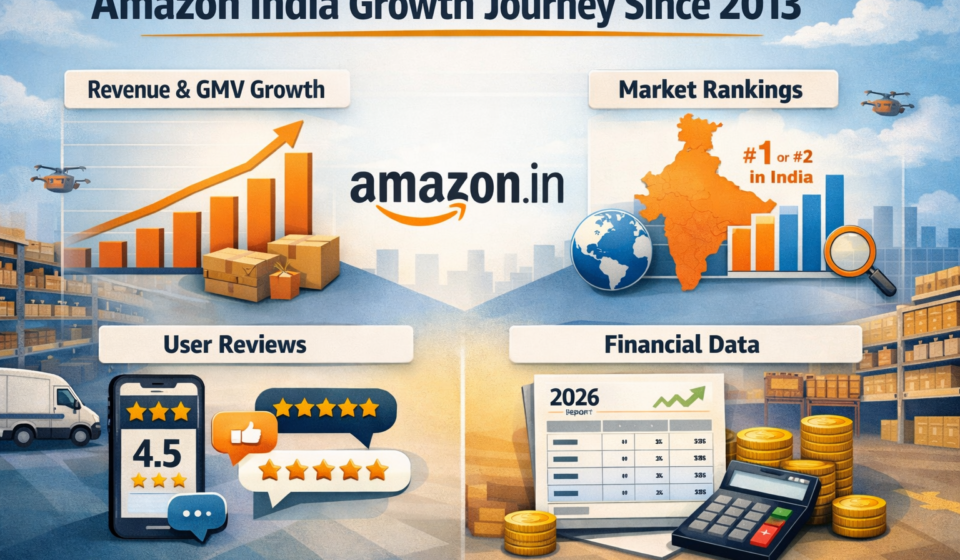
Amazon India Growth Journey Since 2013: Performance, Rankings, User Reviews & Latest Financial Data
Introduction
When Amazon officially launched its India marketplace on June 5, 2013, few anticipated the scale and speed at which it would transform the country’s e-commerce ecosystem. Entering a highly competitive and price-sensitive market, Amazon India focused on long-term investment, customer obsession, and technology-driven logistics.
Over the past 12+ years, the platform has evolved from a books-and-electronics marketplace into a multi-category digital ecosystem spanning retail, payments, cloud computing, entertainment, and logistics. Today, Amazon India stands as one of the top two e-commerce players in the country, competing closely with Flipkart while shaping consumer expectations across urban and rural India.
This article provides a data-driven deep dive into Amazon India growth, covering its performance metrics, financial data, rankings, and user sentiment through 2026.
The Beginning: Launch on June 5, 2013 and Early Years
Amazon India began operations with a marketplace-only model, complying with India’s FDI regulations. Initially, the platform focused on:
- Books and media products
- Electronics and accessories
- Limited third-party seller onboarding
Early Strategy Highlights
- Seller-first approach: Amazon aggressively onboarded small and medium businesses.
- Customer trust building: Easy returns, cash-on-delivery (COD), and reliable delivery.
- Heavy investments: Over $2 billion committed in the early years.
By 2015, Amazon India had already become a serious challenger in the Indian e-commerce space, thanks to its logistics network and customer-centric policies.
Key Milestones in Amazon India’s 12+ Year Journey
2013–2016: Foundation and Rapid Expansion
- Launch of Amazon.in marketplace
- Introduction of Fulfillment by Amazon (FBA)
- Expansion into fashion, home, and appliances
- Launch of Amazon Prime India (2016)
2017–2019: Ecosystem Building
- Entry into Amazon Pay digital payments
- Launch of Prime Video India and content localization
- Expansion to 100+ fulfillment centers
- Growth of seller base beyond 400,000
2020–2022: Pandemic Acceleration
- Surge in demand for essentials and e-grocery
- Launch of Amazon Fresh and expansion of Pantry
- Increased investment in last-mile delivery
- Focus on local kirana partnerships
2023–2026: Scale, Profit Focus & AI Integration
- Expansion into Tier 2 & Tier 3 cities
- AI-driven recommendations and logistics optimization
- Increased focus on profitability and efficiency
- Strengthening private labels and D2C brands
Explosive Performance & Operational Growth
Amazon India’s growth has been fueled by aggressive scaling across multiple dimensions.
1. Seller Ecosystem Growth
- 2013: ~100 sellers
- 2026: 1.3+ million sellers
- Significant contribution from MSMEs and local artisans
2. Product Category Expansion
Amazon India now offers:
- Electronics & gadgets
- Fashion & lifestyle
- Grocery & essentials
- Home & furniture
- Automotive & industrial supplies
Total listings exceed 300 million products.
3. Logistics & Fulfillment Network
- 150+ fulfillment centers across India
- Sortation centers & delivery stations in 20+ states
- Same-day and one-day delivery in major cities
4. Prime Membership Growth
- Estimated 20–25 million Prime members (2025–2026)
- Key drivers:
- Free fast delivery
- Prime Video & Music
- Exclusive deals
5. Technology Investments
- AI-based inventory management
- Voice commerce via Alexa
- Machine learning for fraud detection
- Automation in warehouses
Financial Performance: Latest Numbers & Analysis
Amazon India operates through multiple entities such as Amazon Seller Services Pvt. Ltd. (ASSPL).
Revenue Growth (Estimated Trends)
| Year | Revenue (₹ Crore) | Growth YoY |
|---|---|---|
| 2018 | 7,600+ | — |
| 2020 | 13,000+ | ~70% |
| 2022 | 21,600+ | ~35% |
| 2024 | 25,000+ | ~15% |
| 2025 | 28,000–30,000 | ~12–18% |
Profitability
- Amazon India historically operated at a loss due to heavy investments
- Losses have narrowed significantly post-2023
- Focus shifting toward:
- Cost optimization
- High-margin categories
- Advertising revenue
GMV (Gross Merchandise Value)
- Estimated GMV (2025–2026): $25–30 billion
- Growth driven by:
- Electronics & smartphones
- Fashion & private labels
- Festive sales events
Investments in India
- Total investment: $10+ billion since launch
- Key areas:
- Logistics infrastructure
- Data centers (AWS India)
- Content production
AWS Contribution
While AWS operates separately, India remains a high-growth market, contributing significantly to Amazon’s global cloud revenue.
Market Position & Rankings in India & Globally
E-commerce Market Share (India)
- Amazon India: ~30–32%
- Flipkart Group: ~40–45%
- Others (Meesho, Reliance, etc.): Remaining share
Website Traffic Rankings
- Amazon.in ranks among the top 10 most visited websites in India
- Monthly visits: 500+ million (2025 estimate)
App Rankings
- Consistently among:
- Top Shopping apps on Google Play Store India
- Top grossing apps during sale seasons
Global Position
- India is among Amazon’s top 3 international markets
- High-growth region compared to mature markets like the US and Europe
What Customers Say: Latest User Reviews & Sentiment Analysis
App Ratings (2025–2026)
- Google Play Store: ~4.2/5
- Apple App Store: ~4.6/5
Positive Feedback
Customers frequently praise:
- Fast and reliable delivery
- Easy returns and refunds
- Wide product selection
- Competitive pricing during sales
Common Complaints
- Delivery delays in remote areas
- Fake or low-quality sellers (occasionally)
- Customer service inconsistencies
- Increasing Prime subscription cost concerns
Overall Sentiment
- Strong customer trust and brand loyalty
- Estimated Net Promoter Score (NPS): Positive and improving
- Amazon remains one of the most trusted e-commerce platforms in India
Challenges Faced and How Amazon Overcame Them
1. Regulatory Restrictions
- India’s FDI rules limited inventory-based models
- Amazon adapted by strengthening its marketplace model
2. Intense Competition
- Flipkart, backed by Walmart, remains a strong rival
- Amazon differentiated through:
- Logistics excellence
- Prime ecosystem
3. Profitability Pressure
- Years of losses due to heavy investments
- Shift toward:
- Advertising revenue
- Seller services
- Subscription models
4. Rural Market Penetration
- Challenge: Low internet adoption & logistics issues
- Solution:
- Local language support
- Partnerships with kirana stores
Future Outlook & Strategic Moves
1. Expansion into Tier 2 & Tier 3 Cities
- Focus on affordability and accessibility
- Regional language interfaces
2. AI and Automation
- Personalized shopping experiences
- Predictive delivery systems
3. Private Labels & D2C Brands
- Growth of Amazon-owned brands
- Support for Indian startups
4. Sustainability Initiatives
- Electric delivery vehicles
- Reduced packaging waste
5. Integration of Services
- Seamless ecosystem:
- Shopping
- Payments (Amazon Pay)
- Entertainment (Prime Video)
Conclusion
The Amazon India growth journey since 2013 is a textbook example of long-term strategic investment, customer obsession, and operational excellence. From a modest marketplace to a multi-billion-dollar ecosystem, Amazon India has reshaped how millions of Indians shop, pay, and consume content.
While challenges remain—particularly around profitability and competition—the company’s continued focus on technology, logistics, and customer experience positions it strongly for future growth.
As India’s digital economy expands, Amazon India is not just participating—it is actively defining the future of e-commerce in the country.
Suggested FAQ Section (for SEO boost)
Q1. When did Amazon launch in India?
Amazon launched in India on June 5, 2013.
Q2. What is Amazon India’s market share?
Amazon India holds around 30–32% of the e-commerce market.
Q3. Is Amazon India profitable?
It is moving toward profitability, with losses narrowing after 2023.
Q4. How many sellers are on Amazon India?
Over 1.3 million sellers are active on the platform.
Sources
- Amazon Investor Relations Reports (2024–2025)
- Business Standard financial filings of Amazon Seller Services Pvt. Ltd.
- Economic Times coverage on Amazon India performance
- Reuters reports on Amazon India investments and market share
- Statista (India e-commerce market data)
- SimilarWeb traffic estimates (Amazon.in)
- Google Play Store & Apple App Store ratings (2025–2026)
- Industry analysis reports (RedSeer, Bain & Company)