Flipkart India Growth in the Last 5 Years (2020–2025): Revenue, Market Share, User Reviews & Competitive Analysis
1. Introduction
The story of Flipkart India growth over the last five years (2020–2025) is deeply intertwined with India’s digital transformation, rising internet penetration, and the rapid adoption of e-commerce across urban and tier-2/3 markets. From being a dominant online retailer pre-2020, Flipkart has evolved into a diversified digital commerce ecosystem, competing aggressively with global giant Amazon and emerging local players.
Between 2020 and early 2025, Flipkart scaled its operations significantly—expanding its product categories, strengthening logistics infrastructure, investing in technology, and enhancing user experience. Backed by Walmart, Flipkart has consistently pushed toward profitability while maintaining a strong foothold in India’s fast-growing e-commerce sector.
This article provides a detailed, data-driven analysis of Flipkart’s growth trajectory over the last five years, including financial performance, market position, user sentiment, and strategic innovations—based strictly on publicly available data up to March 29, 2025.
2. Historical Context & Journey (2020–2025)
2020: Pandemic Acceleration
The COVID-19 pandemic acted as a catalyst for e-commerce adoption in India. Flipkart experienced:
- Surge in daily active users
- Increased demand for essentials, electronics, and home products
- Expansion into grocery via Flipkart Supermart
Lockdowns pushed millions of first-time users online, especially from smaller cities.
2021: Category Expansion & Big Billion Days Growth
Flipkart strengthened its core verticals:
- Electronics and smartphones dominated GMV
- Fashion platform Myntra (Flipkart-owned) gained traction
- Big Billion Days recorded record-breaking sales
The company also expanded seller onboarding programs, enabling MSMEs to join the platform.
2022: Supply Chain & Logistics Investments
Flipkart focused heavily on logistics:
- Expansion of Ekart delivery network
- Faster delivery timelines across Tier-2 and Tier-3 cities
- Increased warehouse capacity
The company also introduced Flipkart Quick (hyperlocal delivery), though its scale remained limited compared to competitors.
2023: Monetization & Advertising Growth
Flipkart began strengthening revenue streams beyond marketplace commissions:
- Growth in advertising revenue from sellers
- Enhanced data-driven marketing tools
- Increased focus on private labels
According to industry estimates, advertising became a significant contributor to overall revenue growth.
2024–Early 2025: Profitability Push & Ecosystem Expansion
By FY2024:
- Flipkart narrowed losses significantly
- Focus shifted to operational efficiency
- Expansion in fintech (Flipkart Pay Later, SuperCoins ecosystem)
Reports indicated improved unit economics and better cost control, aligning with Walmart’s long-term profitability goals.
3. Financial Performance
Flipkart’s financial journey from 2020 to 2025 reflects a balance between aggressive growth and gradual cost optimization.
Revenue Growth (FY20–FY24)
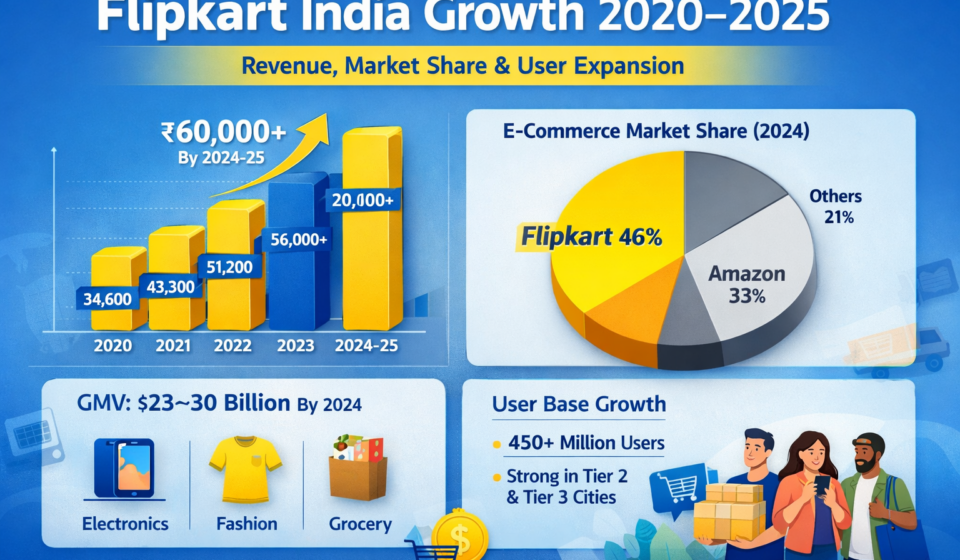
| Financial Year | Estimated Revenue (₹ crore) | Growth Trend |
|---|---|---|
| FY2020 | ~34,600 | Strong growth during pandemic |
| FY2021 | ~43,300 | Continued expansion |
| FY2022 | ~51,200 | Category diversification |
| FY2023 | ~56,000+ | Slower but steady growth |
| FY2024 | ~60,000+ (est.) | Efficiency-driven growth |
Source references: Company filings, Business Standard, Economic Times (pre-March 2025)
GMV (Gross Merchandise Value)
- Flipkart’s GMV was estimated between $23–30 billion range by 2024 (Redseer estimates)
- Strong contribution from:
- Smartphones (largest share)
- Electronics
- Fashion (via Myntra)
Profitability Trends
- Flipkart reported consistent losses through FY2023, though narrowing
- Cost optimization measures included:
- Reduced discounts
- Improved logistics efficiency
- Higher-margin services (ads, fintech)
Walmart’s Role
As the parent company, Walmart:
- Invested billions since acquiring Flipkart in 2018
- Reported Flipkart’s improving contribution in investor filings
- Focused on long-term profitability rather than short-term gains
Advertising & Ancillary Revenue
- Seller advertising became a major revenue driver
- Sponsored listings and brand campaigns increased significantly
- Fintech products (Flipkart Pay Later) added incremental revenue streams
4. Market Performance & Ranking
Market Share & Position
By 2024:
- Flipkart held approximately 45–48% share in India’s e-commerce market (Redseer estimates)
- Amazon followed closely with ~30–35%
Flipkart maintained leadership in:
- Smartphones
- Large appliances
- Fashion (via Myntra)
User Base Growth
- Estimated 450+ million registered users
- Strong penetration in Tier-2 and Tier-3 cities
- Increased adoption among first-time online shoppers
Order Volume
- Millions of daily orders during peak sale events
- Big Billion Days remained one of India’s largest online shopping festivals
Category-Wise Performance
Top-performing categories:
- Electronics & smartphones (largest GMV contributor)
- Fashion & lifestyle
- Home appliances
Emerging categories:
- Grocery
- Beauty & personal care
- Furniture
5. User Experience & Reviews
User experience has been one of the most critical drivers of Flipkart India growth, shaping both customer retention and brand perception.
App Ratings (as of early 2025)
- Android (Google Play): ~4.3–4.5 stars
- iOS (App Store): ~4.5+ stars
These ratings reflect a generally positive user sentiment, though not without concerns.
Key Strengths (User Praises)
1. Competitive Pricing & Deals
- Frequent discounts, especially during Big Billion Days
- Attractive exchange offers on smartphones
2. Wide Product Selection
- Strong catalog across electronics, fashion, and appliances
- Exclusive product launches (especially smartphones)
3. Delivery Experience
- Faster delivery in urban areas
- Reliable logistics via Ekart
4. Easy EMI & Payment Options
- No-cost EMI
- Pay Later options improved affordability
Common User Complaints
Despite strong growth, user feedback highlights several recurring issues:
1. Customer Service Challenges
- Delayed responses in some cases
- Difficulty in resolving return/refund disputes
2. Return & Replacement Issues
- Reports of stricter return policies post-2022
- Occasional dissatisfaction with product replacements
3. Seller Quality Variability
- Mixed experiences depending on seller reliability
- Complaints about counterfeit or defective items (limited but notable)
4. Delivery Delays in Remote Areas
- Tier-3 and rural areas still face delays compared to metros
Overall Customer Sentiment
- Positive overall sentiment, especially for value-driven shoppers
- Flipkart is perceived as:
- Affordable
- Accessible
- Deal-oriented
However, improving post-purchase service remains a key opportunity.
6. Key Strategies & Innovations
Flipkart’s growth between 2020 and 2025 has been driven by several strategic initiatives:
1. Focus on Tier-2 & Tier-3 Markets
- Localization of app (regional languages)
- Cash-on-delivery support
- Affordable product ranges
2. Logistics & Supply Chain Expansion
- Strengthening Ekart network
- Faster last-mile delivery
- Warehouse automation
3. Big Billion Days Strategy
- Annual flagship sale driving massive GMV
- Brand partnerships and exclusive launches
4. Private Labels & Exclusives
- Higher margins compared to third-party sellers
- Strong presence in fashion and electronics
5. Fintech Integration
- Flipkart Pay Later
- SuperCoins loyalty program
- Embedded finance offerings
6. Advertising Ecosystem
- Monetization via seller ads
- Data-driven targeting tools
7. Challenges Faced
Despite impressive Flipkart India growth, the company has faced several challenges:
1. Intense Competition
- Amazon remains a strong competitor
- Emerging players like Meesho targeting price-sensitive users
2. Profitability Pressure
- High logistics and customer acquisition costs
- Need to balance growth with margins
3. Regulatory Environment
- India’s evolving e-commerce rules
- Restrictions on deep discounting and foreign investment structures
4. Customer Trust Issues
- Complaints around returns and refunds
- Seller quality inconsistencies
5. Quick Commerce Competition
- Limited presence compared to players like Blinkit and Zepto
8. Conclusion & Outlook
Between 2020 and early 2025, Flipkart has transformed from a high-growth, loss-making marketplace into a more mature, efficiency-driven e-commerce leader. Backed by Walmart, the company has:
- Strengthened its market leadership
- Expanded its user base significantly
- Diversified revenue streams beyond traditional commissions
Looking ahead (based on analyst views available up to March 2025):
- Flipkart is expected to continue focusing on profitability
- Expansion in fintech and advertising will drive margins
- Tier-2/3 market penetration will remain a key growth lever
However, sustaining leadership will require:
- Better customer service
- Stronger seller quality control
- Innovation in logistics and quick commerce
Overall, Flipkart remains a central player in India’s digital commerce revolution, with a strong foundation for long-term growth.
FAQ
Q1. What is Flipkart’s market share in India in 2025?
Flipkart holds around 45–48% market share in India’s e-commerce sector as of early 2025, making it the market leader.
Q2. How much revenue does Flipkart generate?
Flipkart’s revenue crossed ₹60,000 crore (estimated) by FY2024, showing steady growth over the past five years.
Q3. How does Flipkart compare with Amazon India?
Flipkart leads in market share and smartphone sales, while Amazon remains strong in premium services and logistics.
Q4. What are Flipkart user reviews like?
Flipkart maintains strong app ratings (4.3–4.5 stars), with users praising pricing and deals but highlighting customer service issues.